Vineyards
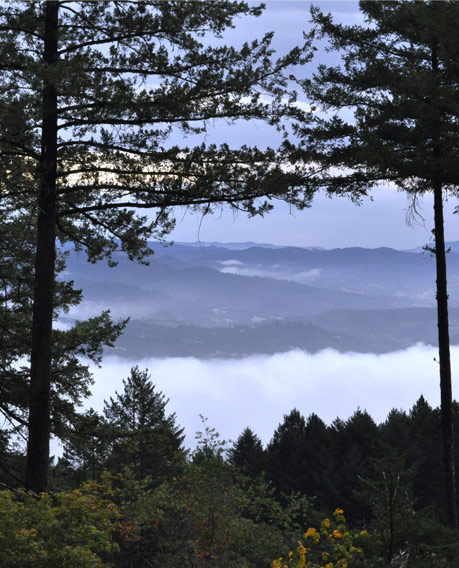
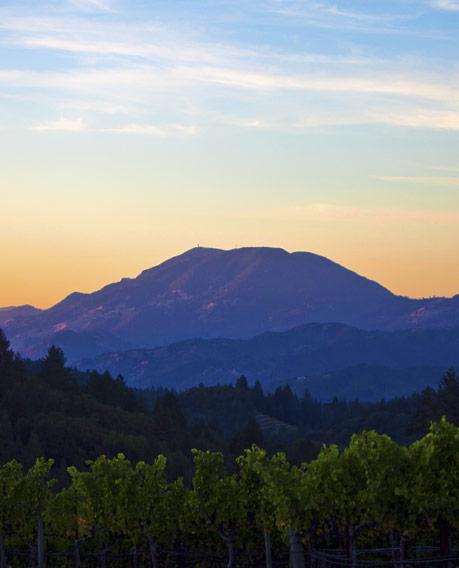
Terra Valentine stretches between two Spring Mountain estate properties whose varied terrain shines through in the robust yet balanced style of the wines–exhibiting the true essence of the Spring Mountain District. While mountain viticulture presents its challenges, for Terra Valentine, it comes down to hand-tending the vines to get the most out of the diverse soil types and ripening patterns that the mountain bears. The reward–wines ripe with intense flavor and color.
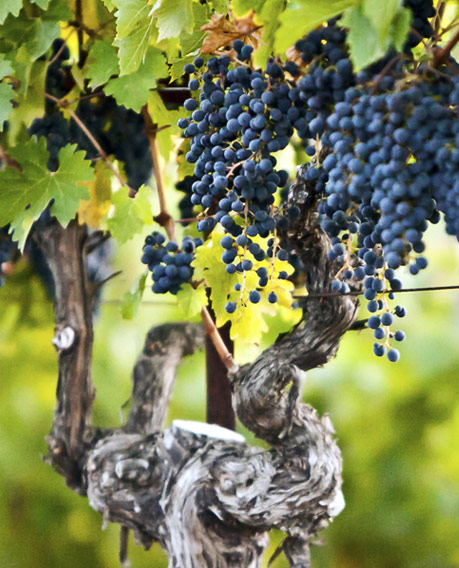
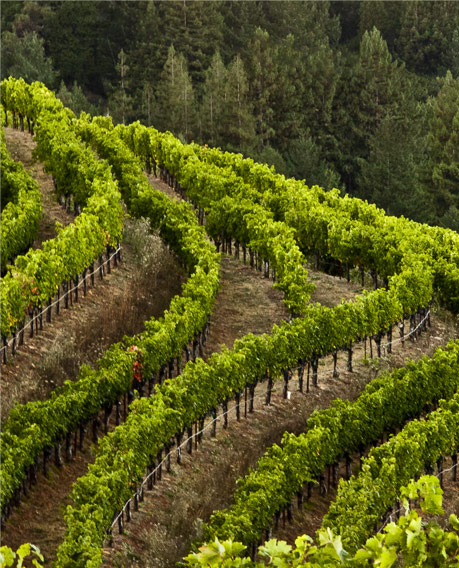
The replanted Yverdon vineyard flourishes with harvest just days away.
Terra Valentine Estate
The Terra Valentine Estate, purchased in 1999 by Angus and Margaret Wurtele, serves as home to the Terra Valentine winery and Villa. The parcel is poised at the peak of the Mayacamas Mountain Range, reaching elevations of 2100 feet and boasting some of the highest peaks on Spring Mountain. The property is comprised of 25 sustainably farmed vineyard acres, paired with an additional 50 acres which have been left to native forest land.

Terra Valentine Estate Vineyard
Planted in 2006 to Cabernet Sauvignon, Merlot, Cabernet Franc Petit Verdot, Syrah, Mourvedre, Pinot Noir, and Riesling, the clones and rootstocks were paired to the distinct soils and micro-climates found on this diverse estate. The parcel, which was divided into 32 irrigation blocks, is farmed by the in-house vineyard team, led by Vineyard Manager Armando Hernandez, who custom tailors the cultural practices for each block to maximize the flavor and ripeness–a direct expression of the distinct character of the terroir.

Yverdon Vineyard
The eight acre Yverdon vineyard on the Terra Valentine Estate was originally planted in the '60s, only to be pulled out in the '80s, by former owner Fred Aves. In 2001 the Terra Valentine crew replanted the Yverdon vineyard to Cabernet Sauvignon and Merlot.


Terra Valentine Estate Soils
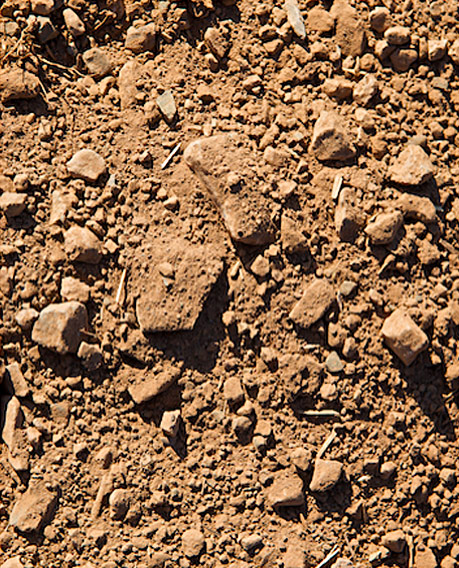
The complex topography of the vineyard soil is volcanic in origin, Boomer Series Loam and Forward Series Gravelly Loam. A well-drained rocky soil structure contributes to the intensity of flavor that comes from these ideal conditions.

Estate Climate
Situated above the fog line, the Terra Valentine Estate experiences very warm morning and mid-day temperatures in comparison to the valley floor. Cool afternoon winds blow from the Pacific Ocean, keeping the peak temperatures lower, producing a long growing season and hang-time for the fruit. The vineyard experiences later bud break and harvest, all of which contribute to the floral characteristics and hints of black licorice and dark fruit in the Terra Valentine Estate wines. These wines reflect the true essence of the Spring Mountain District, showcasing the individuality of the estate, and yielding a true sense of place.
Wurtele Vineyard
The 30-acre Wurtele Vineyard planted in 1990 by Raymond family was purchased by Angus and Margaret Wurtele in 1995. The vineyard, which sits at elevations between 600 to1000 feet, exudes variations of slope, aspect, and soil. Much like a compass rose, the vineyard is comprised of multiple exposure points that span a full 360 degrees around a central knoll. Though planted exclusively to clone 7 Cabernet Sauvignon, these exposures yield variety in vine orientation and tannin intensity, all of which lend to the unique characteristics of the wine.


Wurtele Vineyard Soil
Young and old soil types commingle, often butting up against each other within the same block–a result of the Mayacamas Mountain Range formation. The younger, Aiken series clay with volcanic origins and its holey, dark-reddish rock formations contrasts the older Franciscan series sedimentary soil comprised of ancient ocean beds.

Wurtele Vineyard Climate
Located at elevations between 600-1000 feet, the Wurtele Vineyard experiences a climate more similar to the valley floor. Immersed in morning fog, the vineyard sees an earlier burn-off than what is seen at lower elevations. The situation of the vineyard allows for ample afternoon sun providing warm temperatures in contrast to what is experienced at higher elevations.
Spring Mountain District
Spring Mountain District was one of the first appellations in Napa Valley to receive notoriety as a grape growing region with documented grape plantings dating back to 1874. The area experienced its first boom in the 1880s when Jacob and Frederick Beringer planted a vineyard on Spring Mountain. The region experienced a decline between 1910 to 1940 due to the onset of phylloxera and Prohibition, but bounced back in the '50s with the launch of the Stony Hill Winery in 1953.


Spring Mountain District Characteristics
The Spring Mountain District was officially established as an AVA in 1993. The appellation lies above the town of St. Helena on the eastern slopes of the Mayacamas Mountains that separate Napa Valley from Sonoma County. Current day, the region is comprised of more than 1,000 vineyard acres, spread across almost 8,600 acres of land, showcasing more than 30 vineyards and wineries. The terrain is mixed with terraces, slopes, forest land, and is infamous for the winding switchbacks that lead you up the mountain. The Spring Mountain District continues to receive worldwide notoriety with wines distinguished by intense flavors and balanced tannins.